Migration در بستهبندی آرایشی چیست و چرا باید آن را بشناسیم؟
Migration یا میگریشن در بستهبندی آرایشی و بهداشتی به معنای مهاجرت یا انتقال برخی مواد شیمیایی از بستهبندی به داخل محصول آرایشی است. این پدیده زمانی اهمیت پیدا میکند که مواد تشکیلدهنده ظرف، درپوش، واشر، قطرهچکان یا سایر اجزای بستهبندی با فرمولاسیون محصول در تماس باشند و احتمال انتقال ترکیباتی از آنها به محصول وجود داشته باشد.
برای مثال، تصور کنید یک برند مراقبت از پوست، سرم ویتامین C یا روغن صورت خود را در یک شیشه سرم بستهبندی میکند. اگرچه بدنه شیشهای معمولاً مقاومت شیمیایی مناسبی دارد، اما اجزایی مانند حباب لاستیکی، درپوش پلاستیکی، واشر یا پیپت شیشه قطره چکان نیز ممکن است با محصول تماس پیدا کنند. در چنین شرایطی، بررسی احتمال Migration به انتخاب بستهبندی مناسب کمک میکند.
نکته مهم این است که میگریشن لزوماً به معنای وجود مواد مضر در محصول نیست. برای تشخیص اهمیت این پدیده، باید مشخص شود چه مادهای منتقل شده، چه مقدار از آن انتقال یافته و آیا این میزان بر ایمنی یا کیفیت محصول تأثیر میگذارد یا خیر.
به همین دلیل، در صنعت تولید محصولات آرایشی و بهداشتی، انتخاب ظروف آرایشی و بهداشتی فقط به طراحی، رنگ، حجم و ظاهر لوکس محدود نمیشود؛ بلکه سازگاری شیمیایی بستهبندی با محصول نیز باید مورد توجه قرار گیرد.
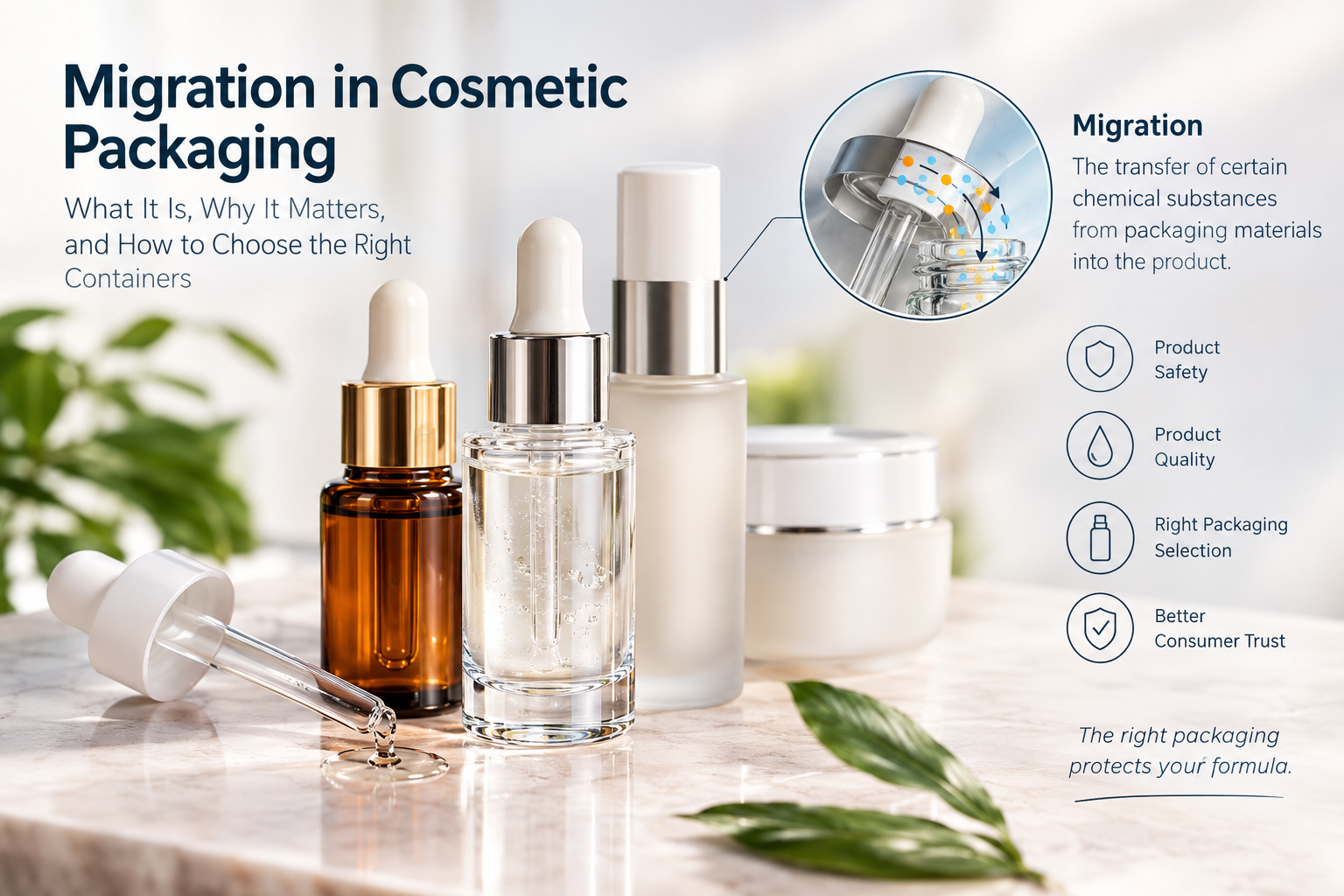
چرا شناخت Migration در بستهبندی آرایشی اهمیت دارد؟
بستهبندی یکی از بخشهای مهم زنجیره تولید محصولات آرایشی و بهداشتی است. محصول ممکن است هفتهها یا ماهها درون ظرف باقی بماند و در این مدت با سطوح داخلی و اجزای مختلف بستهبندی در تماس باشد. بنابراین، انتخاب ظروف آرایشی و بهداشتی مناسب نقش مهمی در ارزیابی ایمنی و حفظ کیفیت محصول دارد.
شناخت Migration به تولیدکنندگان کمک میکند تا پیش از عرضه محصول به بازار، احتمال انتقال مواد ناخواسته از بستهبندی را بررسی کنند و تصمیم دقیقتری درباره انتخاب شیشه سرم، شیشه قطره چکان و سایر انواع بستهبندی بگیرند.
مهمترین دلایل اهمیت میگریشن عبارتاند از:
-
حفظ ایمنی محصول: بررسی احتمال انتقال مواد ناخواسته از ظروف آرایشی و بهداشتی به فرمولاسیون.
-
حفظ کیفیت محصول: کاهش احتمال بروز تغییرات نامطلوب ناشی از برهمکنش محصول و بستهبندی.
-
انتخاب بستهبندی مناسب: کمک به انتخاب شیشه سرم و شیشه قطره چکان متناسب با ترکیبات محصول.
-
کاهش ریسک تولید: شناسایی مشکلات احتمالی پیش از سفارش و تولید انبوه.
-
افزایش اعتماد مشتری: توجه به کیفیت و ایمنی بستهبندی در کنار فرمولاسیون و ظاهر محصول.
برای برندهایی که محصولات مراقبت از پوست تولید میکنند، توجه به این موضوع اهمیت بیشتری دارد؛ زیرا برخی فرمولاسیونها به شرایط نگهداری، تماس با مواد بستهبندی و محافظت در برابر نور و اکسیژن حساس هستند.
انواع Migration در بستهبندی محصولات آرایشی و بهداشتی
برای شناخت بهتر میگریشن، لازم است میان چند مفهوم فنی تفاوت قائل شویم. همه مشکلات مربوط به بستهبندی به یک شکل رخ نمیدهند و هرکدام ممکن است به بررسی متفاوتی نیاز داشته باشند.
۱. مهاجرت مواد از بستهبندی به محصول
در این حالت، برخی ترکیبات موجود در مواد بستهبندی به داخل فرمولاسیون منتقل میشوند. این ترکیبات ممکن است از پلاستیک، لاستیک، چسب، جوهر چاپ، پوشش سطحی یا سایر اجزای بستهبندی منشأ بگیرند.
برای مثال، در یک شیشه قطره چکان ممکن است بدنه شیشهای عملکرد مناسبی داشته باشد، اما مواد تشکیلدهنده حباب لاستیکی یا واشر نیازمند بررسی بیشتری باشند.
۲. استخراجپذیرها (Extractables)
استخراجپذیرها موادی هستند که میتوان آنها را تحت شرایط مشخص و معمولاً با استفاده از حلالها یا شرایط آزمایشگاهی کنترلشده از مواد بستهبندی استخراج کرد.
شناسایی این مواد به متخصصان کمک میکند تا ترکیبات بالقوه قابل انتقال از ظروف آرایشی و بهداشتی را بهتر بشناسند. با این حال، وجود یک ماده در آزمون استخراج بهتنهایی ثابت نمیکند که همان ماده در شرایط واقعی نگهداری به محصول منتقل خواهد شد.
۳. مواد قابل مهاجرت یا Leachables
مواد قابل مهاجرت ترکیباتی هستند که در شرایط واقعی استفاده یا نگهداری، از بستهبندی وارد محصول میشوند یا احتمال انتقال آنها وجود دارد.
بررسی این مواد در ارزیابی سازگاری شیشه سرم، شیشه قطره چکان و سایر ظروف آرایشی و بهداشتی اهمیت دارد؛ زیرا هدف اصلی، شناخت رفتار واقعی بستهبندی در کنار فرمولاسیون نهایی است.
۴. جذب مواد محصول توسط بستهبندی
گاهی مسئله فقط انتقال مواد از ظرف به محصول نیست. بعضی ترکیبات فرمولاسیون ممکن است به سطح بستهبندی جذب شوند یا در مواد آن نفوذ کنند. این پدیده میتواند در شرایط خاص بر غلظت برخی ترکیبات یا ویژگیهای محصول تأثیر بگذارد.
بنابراین، ارزیابی بستهبندی باید در صورت لزوم، انتقال مواد در هر دو جهت را در نظر بگیرد.
چه عواملی بر Migration در ظروف آرایشی و بهداشتی تأثیر میگذارند؟
میزان احتمال مهاجرت مواد به مجموعهای از عوامل وابسته است. به همین دلیل، نمیتوان تنها براساس جنس ظاهری ظرف درباره سازگاری آن با یک محصول آرایشی قضاوت کرد.
جنس و کیفیت مواد بستهبندی
جنس بدنه، مواد اولیه، افزودنیها، پوششهای سطحی و قطعات جانبی میتوانند بر رفتار شیمیایی بستهبندی تأثیر بگذارند.
شیشه به دلیل مقاومت شیمیایی مناسب، برای بستهبندی بسیاری از محصولات آرایشی و بهداشتی انتخاب مطلوبی است. بااینحال، کیفیت شیشه، نوع پوشش و سایر اجزای بستهبندی نیز باید متناسب با کاربرد موردنظر بررسی شوند.
ترکیبات فرمولاسیون محصول
محصولات آرایشی از نظر ترکیب شیمیایی تفاوت زیادی دارند. محصولات آبپایه، روغنی، حاوی الکل یا دارای حلالهای خاص ممکن است رفتار متفاوتی در تماس با مواد بستهبندی نشان دهند.
برای مثال، یک شیشه سرم ممکن است برای یک فرمولاسیون آبپایه مناسب باشد، اما همان ترکیب در محصولی با درصد بالای روغن یا حلال به ارزیابی اختصاصی نیاز داشته باشد.
دما و مدت زمان نگهداری
در برخی شرایط، افزایش دما یا طولانیتر شدن مدت تماس میتواند احتمال یا سرعت مهاجرت مواد را افزایش دهد. به همین دلیل، آزمون سازگاری ظروف آرایشی و بهداشتی باید شرایط نگهداری مورد انتظار محصول را در نظر بگیرد.
تماس مستقیم با محصول
هر قطعهای که با فرمولاسیون تماس مستقیم دارد، میتواند از نظر سازگاری اهمیت داشته باشد. در شیشه قطره چکان، این قطعات ممکن است شامل پیپت، حباب، واشر و قسمتهای داخلی درپوش باشند.
در شیشه سرم نیز نوع درب، قطعات آببندی و هرگونه پوشش داخلی باید در صورت ارتباط با محصول بررسی شوند.
شرایط حملونقل و مصرف
بستهبندی تنها در زمان نگهداری ثابت نیست. تغییرات دما، تکان خوردن ظرف، باز و بسته شدن مکرر و تماس با هوا در زمان مصرف میتوانند بر عملکرد کلی بستهبندی تأثیر بگذارند.
به همین دلیل، انتخاب ظروف آرایشی و بهداشتی باید علاوه بر شرایط انبارداری، نحوه استفاده واقعی مصرفکننده را نیز در نظر بگیرد.
آیا شیشه سرم و شیشه قطره چکان از Migration جلوگیری میکنند؟
شیشه یکی از مواد پرکاربرد برای بستهبندی محصولات آرایشی و بهداشتی است و مقاومت شیمیایی مناسب آن، استفاده از شیشه سرم و شیشه قطره چکان را برای بسیاری از محصولات مراقبت از پوست امکانپذیر میکند.
با این حال، باید توجه داشت که شیشهای بودن ظرف به معنای حذف کامل احتمال Migration در کل بستهبندی نیست.
در یک شیشه سرم، بدنه شیشهای ممکن است از نظر تماس شیمیایی عملکرد مناسبی داشته باشد، اما درپوش یا قطعات جانبی همچنان به ارزیابی نیاز داشته باشند. در شیشه قطره چکان نیز حباب لاستیکی، پیپت، واشر و سایر اجزا باید بهعنوان بخشی از سیستم بستهبندی بررسی شوند.
بنابراین، برای انتخاب صحیح ظروف آرایشی و بهداشتی باید میان جنس بدنه و عملکرد کل بستهبندی تفاوت قائل شد.
مزایای استفاده از شیشه سرم
شیشه سرم برای بستهبندی بسیاری از محصولات مراقبت از پوست کاربرد دارد و میتواند مزایای زیر را ارائه دهد:
-
مقاومت شیمیایی مناسب برای بسیاری از فرمولاسیونها.
-
امکان تولید در رنگها، شکلها و ظرفیتهای مختلف.
-
ظاهر حرفهای و مناسب برای محصولات تخصصی مراقبت از پوست.
-
امکان انتخاب شیشه شفاف، مات یا رنگی متناسب با نیاز محصول.
-
قابلیت ترکیب با انواع درپوش و سیستمهای قطرهچکان، در صورت سازگاری اجزا.
البته انتخاب رنگ شیشه باید با توجه به حساسیت محصول به نور انجام شود. برای فرمولاسیونهای حساس به نور، شیشه رنگی یا بستهبندی محافظ نور ممکن است مناسبتر باشد؛ اما میزان محافظت واقعی باید براساس ویژگیهای ظرف ارزیابی شود.
مزایای استفاده از شیشه قطره چکان
شیشه قطره چکان یکی از گزینههای رایج برای بستهبندی سرمهای پوستی، روغنهای صورت و برخی محصولات مراقبتی است.
مهمترین مزایای این نوع ظروف آرایشی و بهداشتی عبارتاند از:
-
امکان برداشت و مصرف محصول در مقادیر کم.
-
ظاهر مناسب برای محصولات آرایشی و بهداشتی تخصصی.
-
امکان استفاده از بدنه شیشهای با مقاومت شیمیایی مناسب.
-
تنوع در حجم، رنگ، طراحی و نوع درپوش.
-
امکان هماهنگی بستهبندی با هویت بصری برند.
بااینحال، قطرهچکان لزوماً مقدار کاملاً ثابتی از محصول را در هر بار مصرف ارائه نمیدهد. میزان خروجی به ویسکوزیته محصول، طراحی پیپت و نحوه استفاده بستگی دارد. همچنین، باز شدن مکرر درپوش میتواند تماس محصول با هوا را افزایش دهد.
بنابراین، انتخاب شیشه قطره چکان باید بر اساس فرمولاسیون، عملکرد مورد انتظار و نتایج آزمونهای سازگاری انجام شود.
نقش شیشه سرم در حفظ کیفیت محصولات مراقبت از پوست
بسیاری از محصولات مراقبت از پوست حاوی ترکیباتی هستند که ممکن است نسبت به نور، اکسیژن، دما یا تماس با مواد ناسازگار حساس باشند. به همین دلیل، انتخاب شیشه سرم مناسب باید بخشی از فرایند توسعه محصول باشد.
برای مثال، برخی فرمولاسیونهای حاوی ویتامین C ممکن است در برابر نور و اکسیژن حساس باشند. در چنین مواردی، انتخاب رنگ مناسب شیشه، بررسی آببندی درپوش و ارزیابی شرایط مصرف میتواند در حفظ کیفیت محصول نقش داشته باشد.
در محصولات حاوی رتینوئیدها یا ترکیبات حساس دیگر نیز باید شرایط پایداری فرمولاسیون در کنار عملکرد بستهبندی بررسی شود.
نکته مهم این است که Migration تنها عامل مؤثر بر کیفیت محصول نیست. نفوذ اکسیژن، عبور نور، تبخیر، نشتی و تغییرات ناشی از شرایط نگهداری نیز ممکن است اهمیت داشته باشند.
بنابراین، برای انتخاب شیشه سرم باید مجموعهای از معیارها شامل سازگاری شیمیایی، محافظت در برابر عوامل محیطی، عملکرد درپوش و شرایط واقعی نگهداری بررسی شود.
چگونه Migration را در شیشه قطره چکان بررسی کنیم؟
برای ارزیابی شیشه قطره چکان، لازم است تمام اجزای بستهبندی در کنار فرمولاسیون نهایی بررسی شوند. آزمایش بدنه شیشهای بهتنهایی نمیتواند سازگاری کل سیستم را تأیید کند.
فرایند ارزیابی میتواند شامل مراحل زیر باشد:
۱. بررسی مواد تشکیلدهنده بستهبندی
اطلاعات فنی بدنه شیشهای، پیپت، حباب لاستیکی، درپوش و واشر باید از تأمینکننده دریافت و بررسی شود.
۲. بررسی سازگاری با فرمولاسیون
نوع محصول، ترکیبات اصلی، میزان اسیدیته، درصد روغن و حلالها و سایر ویژگیهای مرتبط باید در انتخاب بستهبندی در نظر گرفته شوند.
۳. انجام آزمونهای پایداری و سازگاری
نمونههای پرشده از محصول باید در شرایط مناسب و متناسب با کاربرد نهایی ارزیابی شوند. این آزمونها میتوانند تغییرات ظاهری، بو، رنگ، عملکرد قطرهچکان، نشتی و در صورت نیاز تغییرات شیمیایی را بررسی کنند.
۴. بررسی احتمال مهاجرت مواد
در صورت وجود نگرانی فنی یا نیاز به ارزیابی ایمنی، میتوان آزمونهای تحلیلی مناسب را برای شناسایی مواد قابل مهاجرت طراحی کرد. روش آزمون باید با نوع بستهبندی و ترکیبات محصول تناسب داشته باشد.
۵. بررسی عملکرد در طول مصرف
عملکرد شیشه قطره چکان باید در شرایط استفاده مورد انتظار نیز ارزیابی شود؛ از جمله باز و بسته شدن مکرر، خروج محصول، آببندی و احتمال تماس ناخواسته اجزا با فرمولاسیون.
نتیجه این بررسیها به تولیدکننده کمک میکند تا پیش از تولید انبوه، انتخاب دقیقتری میان انواع ظروف آرایشی و بهداشتی داشته باشد.
تفاوت Migration با آزمون سازگاری بستهبندی چیست؟
این دو مفهوم با یکدیگر ارتباط دارند، اما دقیقاً یکسان نیستند.
آزمون Migration بر بررسی انتقال مواد از بستهبندی به محصول تمرکز دارد. در این ارزیابی، هدف شناسایی مواد منتقلشده و بررسی اهمیت آنها از نظر ایمنی یا کیفیت است.
در مقابل، آزمون سازگاری بستهبندی دامنه گستردهتری دارد و ممکن است علاوه بر مهاجرت مواد، تغییرات ظاهری محصول، نشتی، تغییر شکل ظرف، عملکرد درپوش، تغییر بو، تبخیر و پایداری فرمولاسیون را نیز بررسی کند.
برای مثال، ممکن است یک شیشه سرم از نظر انتقال مواد مشکلی نشان ندهد، اما درپوش آن بهخوبی آببندی نشود. در این شرایط، بستهبندی از نظر عملکردی با مشکل روبهرو است، حتی اگر شواهدی از Migration نامطلوب مشاهده نشده باشد.
به همین دلیل، در انتخاب ظروف آرایشی و بهداشتی باید هم احتمال مهاجرت مواد و هم سازگاری کلی بستهبندی با محصول بررسی شود.
چه استانداردها و الزامات فنی برای Migration اهمیت دارند؟
ارزیابی Migration باید متناسب با بازار هدف، نوع محصول و الزامات قانونی مربوط به آن انجام شود.
در بازار اروپا، راهنمای Cosmetics Europe درباره اطلاعات بستهبندی، به بررسی مواد مختلف مورد استفاده در ساخت بستهبندی محصولات آرایشی و بهداشتی و اطلاعات موردنیاز برای ارزیابی ایمنی میپردازد. این راهنما مواد مختلفی از جمله پلاستیک، چسب، فلز، جوهر چاپ، لاستیک، سیلیکون، شیشه و سرامیک را در بر میگیرد.
بر اساس این رویکرد، اطلاعات مواد بستهبندی باید به ارزیاب ایمنی کمک کند تا مشخص کند آیا بستهبندی میتواند بر ایمنی فرمولاسیون تأثیر بگذارد یا خیر.
برای تولیدکنندگان شیشه سرم و شیشه قطره چکان، این موضوع اهمیت دارد؛ زیرا ارزیابی باید تمام اجزای مرتبط بستهبندی را در بر بگیرد و صرفاً به جنس بدنه محدود نشود.
همچنین، باید میان استانداردهای مربوط به کیفیت و عملکرد بستهبندی، الزامات قانونی محصولات آرایشی و آزمونهای اختصاصی مهاجرت تفاوت قائل شد. انجام یک آزمون عمومی یا دریافت یک گواهی کلی، لزوماً سازگاری همه بستهبندیها با تمام فرمولاسیونها را اثبات نمیکند.
منبع پیشنهادی برای مطالعه بیشتر: Cosmetics Europe – Explanatory Note: General Approach for Cosmetic Packaging
هنگام خرید ظروف آرایشی و بهداشتی به چه نکاتی توجه کنیم؟
برای خرید ظروف آرایشی و بهداشتی، لازم است علاوه بر قیمت و ظاهر، معیارهای فنی مرتبط با محصول نیز بررسی شوند.
نکات مهم هنگام خرید شیشه سرم
-
انتخاب حجم متناسب با مقدار مصرف و نوع محصول.
-
بررسی کیفیت ساخت، یکنواختی و سلامت بدنه شیشهای.
-
انتخاب رنگ مناسب با توجه به حساسیت فرمولاسیون به نور.
-
بررسی نوع درپوش و عملکرد آببندی.
-
دریافت اطلاعات فنی مواد مورد استفاده در اجزای بستهبندی.
-
ارزیابی سازگاری شیشه سرم با محصول نهایی پیش از سفارش عمده.
نکات مهم هنگام خرید شیشه قطره چکان
-
بررسی جنس و کیفیت پیپت و حباب قطرهچکان.
-
اطمینان از سازگاری اجزای در تماس با محصول.
-
بررسی عملکرد قطرهچکان با توجه به غلظت و ویسکوزیته فرمولاسیون.
-
بررسی آببندی و احتمال نشتی در شرایط حملونقل.
-
انتخاب حجم و طراحی متناسب با کاربرد محصول.
-
درخواست نمونه و انجام آزمونهای لازم پیش از تولید انبوه.
در نهایت، بهترین ظروف آرایشی و بهداشتی الزاماً گرانترین یا زیباترین گزینهها نیستند؛ بلکه بستهبندیهایی هستند که با فرمولاسیون محصول، شرایط نگهداری، نیاز مصرفکننده و الزامات کیفی سازگاری داشته باشند.
اشتباهات رایج درباره Migration در بستهبندی آرایشی
در فرایند انتخاب بستهبندی، برخی تصورات نادرست میتوانند به تصمیمگیری اشتباه منجر شوند.
اشتباه اول: هر نوع Migration خطرناک است.
وجود احتمال مهاجرت مواد بهتنهایی به معنای خطرناک بودن محصول نیست. نوع ماده، مقدار انتقالیافته و میزان مواجهه باید ارزیابی شوند.
اشتباه دوم: بستهبندی شیشهای هیچ مشکلی ندارد.
شیشه معمولاً مقاومت شیمیایی مناسبی دارد، اما اجزای دیگر مانند واشر، درپوش و حباب لاستیکی ممکن است نیازمند بررسی باشند.
اشتباه سوم: ظاهر باکیفیت ظرف، نشانه سازگاری شیمیایی آن است.
ظاهر زیبا و کیفیت ساخت مطلوب، لزوماً سازگاری بستهبندی با فرمولاسیون را اثبات نمیکند.
اشتباه چهارم: یک شیشه سرم برای همه محصولات مناسب است.
فرمولاسیونهای مختلف ممکن است به بستهبندیهای متفاوتی نیاز داشته باشند. انتخاب شیشه سرم باید براساس ویژگیهای محصول نهایی انجام شود.
اشتباه پنجم: بررسی بدنه شیشه قطره چکان کافی است.
قطرهچکان یک سیستم متشکل از چند جزء است. بررسی بدنه بهتنهایی برای ارزیابی کامل سازگاری بستهبندی کافی نیست.
پرسشهای متداول درباره Migration در بستهبندی آرایشی و بهداشتی
Migration در محصولات آرایشی و بهداشتی چیست؟
Migration یا میگریشن به انتقال احتمالی برخی مواد شیمیایی از بستهبندی به داخل محصول آرایشی گفته میشود. این پدیده میتواند در ظروف پلاستیکی، شیشهای، فلزی و بستهبندیهای ترکیبی بررسی شود.
آیا شیشه سرم برای بستهبندی محصولات آرایشی مناسب است؟
شیشه سرم برای بسیاری از محصولات مراقبت از پوست گزینهای مناسب است؛ زیرا بدنه شیشهای معمولاً مقاومت شیمیایی خوبی دارد. بااینحال، سازگاری درپوش و سایر اجزای بستهبندی نیز باید بررسی شود.
آیا شیشه قطره چکان دچار Migration میشود؟
بدنه شیشهای معمولاً احتمال کمتری برای انتقال برخی ترکیبات آلی نسبت به بسیاری از مواد پلیمری دارد؛ اما اجزای دیگر شیشه قطره چکان، مانند حباب لاستیکی، واشر و درپوش، ممکن است نیازمند ارزیابی باشند. بنابراین، نمیتوان همه مدلهای شیشه قطره چکان را بدون آزمون، کاملاً عاری از Migration دانست.
چگونه از انتقال مواد ناخواسته به محصول جلوگیری کنیم؟
انتخاب مواد بستهبندی مناسب، دریافت مستندات فنی از تأمینکننده، بررسی سازگاری فرمولاسیون با ظرف و انجام آزمونهای لازم میتوانند به کاهش ریسک مهاجرت مواد کمک کنند.
آیا Migration باعث تغییر رنگ یا بوی محصول میشود؟
در برخی شرایط، برهمکنش میان بستهبندی و فرمولاسیون میتواند با تغییر رنگ، بو یا سایر ویژگیهای محصول همراه باشد. بااینحال، این تغییرات همیشه ناشی از Migration نیستند و ممکن است دلایل دیگری مانند اکسیداسیون یا ناپایداری فرمولاسیون داشته باشند.
آیا آزمون سازگاری برای همه ظروف آرایشی و بهداشتی لازم است؟
نوع و دامنه آزمون به ویژگیهای محصول، مواد بستهبندی، میزان ریسک و الزامات قانونی بستگی دارد. برای انتخاب بستهبندی جدید یا تغییر فرمولاسیون، ارزیابی سازگاری پیش از تولید انبوه اقدامی مهم و توصیهشده است.
Migration یکی از موضوعات مهم در ارزیابی ایمنی و سازگاری ظروف آرایشی و بهداشتی است. شناخت این پدیده به تولیدکنندگان کمک میکند تا احتمال انتقال مواد ناخواسته از بستهبندی به محصول را بررسی کنند و از انتخاب بستهبندی نامتناسب با فرمولاسیون جلوگیری کنند.
شیشه سرم و شیشه قطره چکان به دلیل ویژگیهای شیمیایی مناسب بدنه شیشهای، ظاهر حرفهای و کاربرد گسترده در محصولات مراقبت از پوست، از گزینههای مهم صنعت بستهبندی آرایشی محسوب میشوند. بااینحال، انتخاب این ظروف باید همراه با بررسی سایر اجزا، شرایط نگهداری و سازگاری با محصول نهایی باشد.
اگر هدف، تولید محصولی باکیفیت و بستهبندی قابلاعتماد است، باید در کنار طراحی و زیبایی ظاهری، به اطلاعات فنی، کیفیت ساخت و آزمونهای سازگاری نیز توجه کرد. در نهایت، انتخاب آگاهانه ظروف آرایشی و بهداشتی میتواند به حفظ کیفیت محصول، کاهش ریسکهای احتمالی و افزایش اعتماد مصرفکننده کمک کند.
What Is Migration in Cosmetic Packaging and Why Is It Important to Understand?
What Does Migration Mean in Cosmetic and Personal Care Packaging?
Migration in cosmetic and personal care packaging refers to the transfer of certain chemical substances from packaging materials into a cosmetic product. This phenomenon becomes important when materials used in the container, cap, seal, dropper, or other packaging components come into contact with the product and potentially release substances into its formulation.
For example, imagine a skincare brand packaging its vitamin C serum or facial oil in a serum bottle. Although the glass body generally offers good chemical resistance, components such as the rubber bulb, plastic cap, gasket, or dropper assembly may also come into contact with the product. In these circumstances, evaluating the potential for migration helps manufacturers select suitable packaging.
It is important to understand that migration does not automatically mean that harmful substances are present in a product. To determine whether migration is a concern, manufacturers must identify which substances have transferred, the quantities involved, and whether those substances could affect product safety or quality.
For this reason, choosing cosmetic and personal care containers involves more than selecting attractive designs, colors, capacities, or premium-looking packaging. Chemical compatibility between the packaging and the product formulation must also be considered.
Why Is Migration Important in Cosmetic Packaging?
Packaging is an essential part of the manufacturing process for cosmetic and personal care products. A product may remain inside its container for weeks or months, during which it may come into contact with internal surfaces and different packaging components. Selecting appropriate cosmetic and personal care containers therefore plays an important role in evaluating product safety and maintaining quality.
Understanding migration helps manufacturers assess the potential transfer of unwanted substances from packaging before launching a product. It also supports informed decisions when selecting serum bottles, dropper bottles, and other packaging solutions.
The main reasons migration matters include:
-
Product safety: Evaluating the potential transfer of unwanted substances from packaging into cosmetic formulations.
-
Product quality: Reducing the likelihood of undesirable changes caused by interactions between the product and its packaging.
-
Packaging selection: Choosing serum bottles and dropper bottles that are compatible with the product formulation.
-
Manufacturing risk reduction: Identifying potential problems before placing large production orders.
-
Consumer confidence: Demonstrating attention to packaging quality and safety alongside formulation and appearance.
This issue is particularly important for skincare brands because certain formulations are sensitive to storage conditions, contact with packaging materials, and exposure to light and oxygen.
Types of Migration and Related Phenomena in Cosmetic Packaging
To understand migration more clearly, it is important to distinguish between several technical concepts. Not all packaging-related problems occur in the same way, and each may require a different evaluation approach.
1. Migration from Packaging into the Product
In this case, certain substances present in packaging materials transfer into the product formulation. These substances may originate from plastics, rubber, adhesives, printing inks, surface coatings, or other packaging components.
For example, the glass body of a dropper bottle may perform well, while the materials used in its rubber bulb or gasket may require further evaluation.
2. Extractables
Extractables are substances that can be removed from packaging materials under defined conditions, often using solvents or controlled laboratory procedures.
Identifying these substances helps specialists understand which compounds could potentially migrate from cosmetic and personal care containers. However, detecting a substance during an extraction study does not automatically prove that it will migrate into the product under normal storage conditions.
3. Leachables
Leachables are substances that migrate from packaging into a product, or are detected in the product, under actual or relevant conditions of use and storage.
Evaluating leachables is important when assessing the compatibility of serum bottles, dropper bottles, and other cosmetic packaging because the objective is to understand how the complete packaging system behaves alongside the final formulation.
4. Absorption of Product Ingredients into Packaging
Sometimes, the issue is not limited to substances moving from packaging into the product. Certain ingredients in a cosmetic formulation may be absorbed onto packaging surfaces or penetrate packaging materials.
Under specific conditions, this phenomenon may affect the concentration of certain ingredients or other product characteristics.
Therefore, when necessary, packaging compatibility assessments should consider the potential movement of substances in both directions.
What Factors Affect Migration in Cosmetic and Personal Care Containers?
The likelihood and extent of migration depend on several factors. As a result, the chemical compatibility of a container cannot be determined solely by its visible material or appearance.
Packaging Material and Quality
The material used for the container body, raw material composition, additives, surface coatings, and auxiliary components can all influence packaging behavior.
Glass offers good chemical resistance and is therefore a suitable option for many cosmetic and personal care products. However, glass quality, coatings, and other packaging components must also be evaluated for the intended application.
Product Formulation
Cosmetic products differ significantly in their chemical composition. Water-based products, oil-based formulations, alcohol-containing products, and products containing specific solvents may behave differently when in contact with packaging materials.
For example, a serum bottle may be suitable for a water-based formulation, while a product containing a high percentage of oils or certain solvents may require additional compatibility testing.
Temperature and Storage Duration
Under certain conditions, higher temperatures or longer contact periods can increase the likelihood or rate of migration. For this reason, compatibility testing for cosmetic and personal care containers should reflect the expected storage conditions of the finished product.
Direct Contact with the Product
Every component that comes into direct contact with the formulation may be relevant to compatibility testing. In a dropper bottle, these components may include the pipette, rubber bulb, gasket, and internal parts of the cap.
In serum bottles, the closure, sealing components, and any internal coatings should also be assessed when they are relevant to product contact.
Transportation and Usage Conditions
Packaging is not exposed only to stationary storage conditions. Temperature variations, movement during transportation, repeated opening and closing, and exposure to air during use can all affect overall packaging performance.
Therefore, selecting cosmetic and personal care containers requires consideration of both storage conditions and the consumer's actual usage patterns.
Do Serum Bottles and Dropper Bottles Prevent Migration?
Glass is widely used in cosmetic packaging because of its favorable chemical resistance. Its properties make serum bottles and dropper bottles suitable for many skincare formulations.
However, using a glass container does not eliminate the possibility of migration from the entire packaging system.
In a serum bottle, the glass body may perform well in terms of chemical compatibility, while the cap or auxiliary components may still require evaluation. Similarly, in a dropper bottle, the rubber bulb, pipette, gasket, and other components must be assessed as parts of the complete packaging system.
Therefore, it is important to distinguish between the glass body itself and the performance of the entire container assembly.
Benefits of Using Serum Bottles
Serum bottles are widely used for many skincare products and offer several advantages:
-
Good chemical resistance for many formulations.
-
Availability in different colors, shapes, and capacities.
-
A professional appearance suitable for premium skincare products.
-
Options for clear, frosted, or colored glass, depending on product requirements.
-
Compatibility with different closures and dropper systems when the components are properly selected.
The glass color should be selected according to the product's sensitivity to light. For light-sensitive formulations, colored glass or packaging designed to provide light protection may be more appropriate. However, the actual level of protection should be evaluated for the specific container.
Benefits of Using Dropper Bottles
Dropper bottles are a common packaging choice for facial serums, facial oils, and selected skincare products.
Their main advantages include:
-
Convenient dispensing of small amounts of product.
-
A professional appearance for specialized cosmetic and personal care products.
-
A glass body with suitable chemical resistance.
-
A variety of capacities, colors, designs, and closure options.
-
The ability to align packaging with a brand's visual identity.
However, a dropper does not necessarily dispense an identical volume with every use. The amount delivered depends on factors such as product viscosity, pipette design, and usage technique. Repeated opening may also increase the product's exposure to air.
For this reason, dropper bottles should be selected according to the formulation, expected dispensing performance, and compatibility test results.
The Role of Serum Bottles in Maintaining Skincare Product Quality
Many skincare products contain ingredients that may be sensitive to light, oxygen, temperature, or contact with incompatible materials. Selecting the right serum bottle should therefore be part of the product development process.
For example, some vitamin C formulations may be sensitive to light and oxygen. In such cases, selecting an appropriate glass color, evaluating closure performance, and assessing storage conditions can help maintain product quality.
Products containing retinoids or other sensitive ingredients may also require careful evaluation of formulation stability alongside packaging performance.
It is important to remember that migration is not the only factor affecting product quality. Oxygen ingress, light transmission, evaporation, leakage, and changes caused by storage conditions may also be relevant.
Therefore, serum bottle selection should consider several criteria, including chemical compatibility, environmental protection, closure performance, and expected storage conditions.
How Can Migration Be Evaluated in Dropper Bottles?
Evaluating dropper bottles requires examining all packaging components alongside the final formulation. Testing the glass body alone cannot confirm the compatibility of the entire packaging system.
The evaluation process may include the following steps:
1. Reviewing packaging materials
Technical information about the glass body, pipette, rubber bulb, cap, and gasket should be obtained from the supplier and reviewed.
2. Assessing formulation compatibility
Product type, key ingredients, pH, oil content, solvents, and other relevant characteristics should be considered when selecting packaging.
3. Conducting stability and compatibility tests
Product-filled samples should be evaluated under conditions appropriate to the intended application. These studies may examine appearance, odor, color, dispensing performance, leakage, and, where necessary, chemical changes.
4. Assessing potential migration
When technical concerns or safety requirements justify further investigation, suitable analytical tests can be designed to identify potentially migrating substances. The test methods should be appropriate for the packaging materials and product formulation.
5. Evaluating performance during use
Dropper bottle performance should also be assessed under expected usage conditions, including repeated opening and closing, dispensing, sealing performance, and potential unintended contact between components and the formulation.
These evaluations help manufacturers make more informed decisions when choosing cosmetic and personal care containers before moving to large-scale production.
What Is the Difference Between Migration Testing and Packaging Compatibility Testing?
These concepts are closely related, but they are not identical.
Migration testing focuses on the transfer of substances from packaging into a product. The objective is to identify transferred substances and evaluate their significance for product safety or quality.
In contrast, packaging compatibility testing has a broader scope. Depending on the product and risk assessment, it may examine migration as well as changes in appearance, leakage, container deformation, closure performance, odor, evaporation, and formulation stability.
For example, a serum bottle may show no concerning migration, but its cap may fail to seal properly. In this situation, the packaging still has a functional problem, even if no undesirable migration has been detected.
Therefore, choosing cosmetic and personal care containers requires evaluating both potential substance migration and the overall compatibility of the packaging with the product.
Which Standards and Technical Requirements Matter for Migration?
Migration assessments should be appropriate for the target market, product type, and applicable regulatory requirements.
In the European market, Cosmetics Europe provides guidance on packaging information and the evaluation of materials used in cosmetic product packaging. Its guidance addresses a range of materials, including plastics, adhesives, metals, printing inks, rubber, silicone, glass, and ceramics.
Under this approach, packaging material information should help the safety assessor determine whether the packaging could affect the safety of the cosmetic formulation.
This is particularly relevant to manufacturers of serum bottles and dropper bottles because the assessment should consider all relevant packaging components, rather than focusing exclusively on the glass body.
It is also important to distinguish between packaging quality and performance standards, legal requirements for cosmetic products, and specific migration tests. A general test or certificate does not necessarily establish that every packaging system is compatible with every formulation.
Further reading: Cosmetics Europe – Explanatory Note: General Approach for Cosmetic Packaging
What Should You Consider When Buying Cosmetic and Personal Care Containers?
When purchasing cosmetic and personal care containers, manufacturers should evaluate technical requirements alongside price, appearance, and design.
Key Considerations When Buying Serum Bottles
-
Choose a capacity appropriate for the product and expected usage.
-
Inspect glass quality, uniformity, and physical integrity.
-
Select a suitable color based on the formulation's sensitivity to light.
-
Evaluate the closure and sealing performance.
-
Request technical information about materials used in packaging components.
-
Assess serum bottle compatibility with the finished product before placing a bulk order.
Key Considerations When Buying Dropper Bottles
-
Check the material and quality of the pipette and rubber bulb.
-
Confirm the compatibility of components that contact the product.
-
Evaluate dispensing performance based on formulation viscosity.
-
Check sealing performance and the risk of leakage during transportation.
-
Select a capacity and design appropriate for the intended application.
-
Request samples and conduct relevant tests before large-scale production.
Ultimately, the best cosmetic and personal care containers are not necessarily the most expensive or visually attractive options. They are the containers that meet the formulation's requirements, storage conditions, consumer needs, and applicable quality standards.
Common Misconceptions About Migration in Cosmetic Packaging
Several misconceptions can lead to poor packaging decisions.
Misconception 1: All migration is dangerous.
The possibility of migration does not automatically mean that a product is unsafe. The substance involved, the amount transferred, and the level of exposure must be evaluated.
Misconception 2: Glass packaging cannot cause any problems.
Glass generally offers good chemical resistance, but other components, including gaskets, caps, and rubber bulbs, may require further assessment.
Misconception 3: A high-quality appearance proves chemical compatibility.
An attractive design and good manufacturing quality do not, by themselves, establish compatibility between packaging and the formulation.
Misconception 4: One serum bottle is suitable for every product.
Different formulations may require different packaging solutions. Serum bottles should be selected according to the characteristics of the finished product.
Misconception 5: Testing the glass body of a dropper bottle is sufficient.
A dropper bottle is a multi-component packaging system. Evaluating the glass body alone is not enough to establish the compatibility of the complete container.
Frequently Asked Questions About Migration in Cosmetic and Personal Care Packaging
What is migration in cosmetic and personal care products?
Migration refers to the potential transfer of certain chemical substances from packaging into a cosmetic product. It can be evaluated in plastic, glass, metal, and multi-material packaging systems.
Are serum bottles suitable for cosmetic products?
Serum bottles are suitable for many skincare products because glass generally offers good chemical resistance. However, the compatibility of the closure and other packaging components must also be evaluated.
Can migration occur in dropper bottles?
The glass body generally presents a lower potential for transferring certain organic compounds than many polymeric materials. However, other components of dropper bottles, such as rubber bulbs, gaskets, and closures, may require assessment. Therefore, all dropper bottles cannot be assumed to be completely free from migration without appropriate evaluation.
How can the transfer of unwanted substances into a product be minimized?
Selecting suitable packaging materials, obtaining technical documentation from suppliers, evaluating formulation compatibility, and conducting appropriate tests can help reduce the risk of unwanted substance migration.
Can migration cause changes in product color or odor?
Under certain conditions, interactions between packaging and formulations may contribute to changes in color, odor, or other product characteristics. However, these changes are not always caused by migration and may also result from oxidation or formulation instability.
Is compatibility testing necessary for all cosmetic and personal care containers?
The type and scope of testing depend on the product, packaging materials, risk level, and applicable regulatory requirements. When introducing new packaging or changing a formulation, evaluating compatibility before large-scale production is an important recommended practice.
Conclusion: Why Is Migration Important When Selecting Cosmetic Packaging?
Migration is an important consideration when evaluating the safety and compatibility of cosmetic and personal care containers. Understanding this phenomenon helps manufacturers assess the potential transfer of unwanted substances from packaging into a product and avoid selecting packaging that is unsuitable for a particular formulation.
Serum bottles and dropper bottles are widely used for skincare products because of the favorable chemical properties of glass, their professional appearance, and their versatility. However, selecting these containers requires evaluating all relevant components, storage conditions, and compatibility with the finished product.
For manufacturers seeking high-quality products and reliable packaging, appearance and design should be considered alongside technical documentation, manufacturing quality, and compatibility testing.
Ultimately, choosing the right cosmetic and personal care containers can help maintain product quality, reduce potential risks, and strengthen consumer confidence.